Perpetual Capitulation of the Empire of the German Nation
States
Electorate of Tellgau
Kingdom of Bohemia
Statistics
Name - ℜ𝔢𝔦𝔠𝔥 𝔇𝔢𝔲𝔱𝔰𝔠𝔥𝔢𝔯 𝔑𝔞𝔱𝔦𝔬𝔫 (German)
Continent - Europe
Capital - Frankfurt (Emperor, Imperial Election); Regensburg (Reichstag); Wetzlar (Reichskammergericht)
Administration
Head of state - Kaiser Ludwig VI (Wittelsbach)
Head of government - Vice-President of the Reichsregiment Ernst Carl von Weizsäcker
Legislature - Reichstag - Reichsweltlichekollegium (upper), Reichsständekollegium (lower), Reichsgeistlichekollegium (religious), Kurfürstenkollegium (electoral)
President of the Reichstag - Principal Commissioner Gabriel, Prince of Thurn and Taxis & Elector of Tellgau
Director of the Kurfürstenkollegium - Friedrich Franz V, Elector of Westphalia
Director of the Reichsweltlichekollegium - Leopold II, Elector of Mark
Director of the Reichsgeistlichekollegium - Johann von Rodt, Archchancellor of Germany & Prince-Archbishop of Regensburg
Director of the Reichsständekollegium - Josef Albrecht zu Oettingen-Wallerstein
Judiciary - Reichskammergericht
Kammerrichter of the Reichskammergericht - Karl von Schönburg
Form of government - Federal elective monarchy under a democratic ministerial confidential constitution
Form of law - Cambacérès Code (commercial, criminal, criminal procedural); civil and civil procedural law varies by state
Demonym - German
Geography
Area - 444,472 km^2
Largest cities
-Vienna - 4,711,000 (city), 7,021,000 (metro)
-Hamburg - 2,394,000 (city), 4,015,000 (metro)
-Dresden - 1,109,000 (city), 2,906,000 (metro)
Time zone
-TMP+01:00 (mainland)
-TMP-04:00 (Virgin Islands)
-TMP+06:00 (Nicobar Islands)
Currency - German thaler
Demography
Language - German
Population - 67,815,000
Density - 152.57 /km^2
Symbols
National festival - St. Boniface Day (June 5) - commemorating the martyrdom of St. Boniface, the patron saint of Germany
Anthem - Deutschland, du herrliches Land
Motto - Fiat iustitia, et pereat mundus
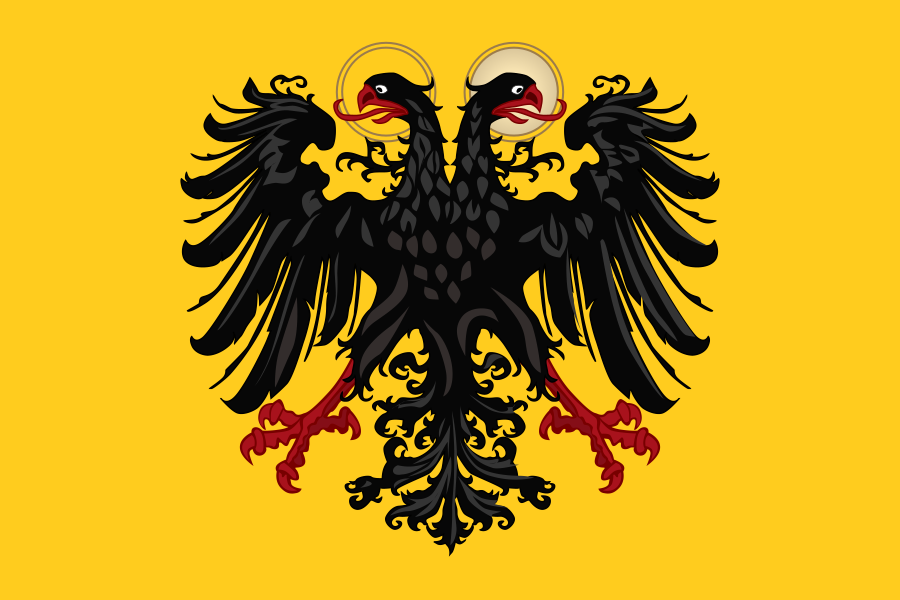
Flag
Cities
| Rank | City | State | City proper | Metropolitan population |
|---|---|---|---|---|
| 1 | Vienna | Archduchy of Austria | 4,711,000 | 7,121,000 |
| 2 | Hamburg | Free City of Hamburg | 2,394,000 | 4,015,000 |
| 3 | Dresden | Electorate of Saxony | 1,109,000 | 3,206,000 |
| 4 | Frankfurt | Free City of Frankfurt | 803,000 | 2,384,000 |
| 5 | Prague | Kingdom of Bohemia | 831,000 | 2,120,000 |
| 6 | Leipzig | Electorate of Saxony | 749,000 | 1,994,000 |
| 7 | Zurich | Electorate of Tellgau | 801,000 | 1,781,000 |
| 8 | Hanover | Electorate of Brunswick-Lüneburg | 948,000 | 1,646,000 |
Reichsregiment
-descends from the Handelspräsidium which was formed to coordinate the Handelsverein
-council which manages the executive and "advises" the emperor
-stays in power if it can pass a budget
Reichstag
-formed from the Old Reichstag of the Holy Roman Empire combined with the Handelstag of the Handelsverein
-Reichsweltlichekollegium, Reichsgeistlichekollegium, and Kurfürstenkollegium meet in the Old Town Hall
-while Reichshandelskollegium meets in purpose-built building
Kurfürstenkollegium
-Electoral College
-consists of electors for
-power over electing emperors
-and jurisdiction over disputes on nature of law
Reichsweltlichekollegium
-Imperial Secular College
-assembly of princes and the Free Cities
-created from Secular Bench of College of Princes
-in practice consists of delegations from the states, with vote totals essentially unchanged
-highest chamber and most prestigious
Reichsgeistlichekollegium
-Imperial Ecclesiastical College
-assembly of clerics
-consisting of the various Roman Catholic and Independent Catholic episcopacies, and the Protestant bishops/consistorial representatives (where appropriate)
-evolved out of "personalist" clerics instituted following 1804 who were given extraterritorial representation in the Reichstag
-has a veto over religious legislation
Reichsständekollegium
-Imperial Estates College
-assembly of popularly elected representatives
-Stände for
-originated as body to allow for commerce - thus its name
-main assembly of German nation and assent required for all bills
Reichsarmee
-Kaiser is nominal commander-in-chief of the entire Reichsarmee
-with each immediate ruler serving as nominal commander of their own army section
-Reichsarmee may be called with dual consent of Reichspräsidium and Kaiser